
Development proposals are reviewed by the permitting agency for compliance with the California Environmental Quality Act. One of the categories evaluated is whether the project could have significant effects on biological resources. Based on the project’s location with regard to sensitive biological resources documented from the area, the agency may require a biological report to be prepared by a “qualified biologist”. These professionals have been determined to meet experience and qualifications standards by the planning and building departments of Central Coast counties. The agencies also have “guidelines” directing the contents of biological reports and protocols for biological surveys. For example, the Planning & Building Department of the County of San Luis Obispo has produced a guidance document for the preparation of Biological Resources Assessments that is located here.
While some agencies such as cities may not have their own template for biological reports, qualified biologists typically utilize the standard guidance for the region in which the site is located. The objectives of the guidelines are to ensure consistency in the quality, accuracy, and completeness of biological reports to ensure that the agency has adequate information to make planning decisions and avoid unnecessary delays. The required contents of a Biological Resources Assessment include the following:
- Project information;
- Background review of biological resources information in the project vicinity;
- Description of existing conditions as determined by the biologist during a reconnaissance site visit;
- Habitat classification and map of vegetation communities;
- Site photographs;
- An evaluation of which sensitive biological resources (special-status plants and animals, designated critical habitat, sensitive natural communities, jurisdictional areas, and oak trees) can or do occur onsite;
- An impact assessment of the potential for the project to adversely affect sensitive biological resources; and
- Recommended measures to avoid, minimize or mitigate impacts.
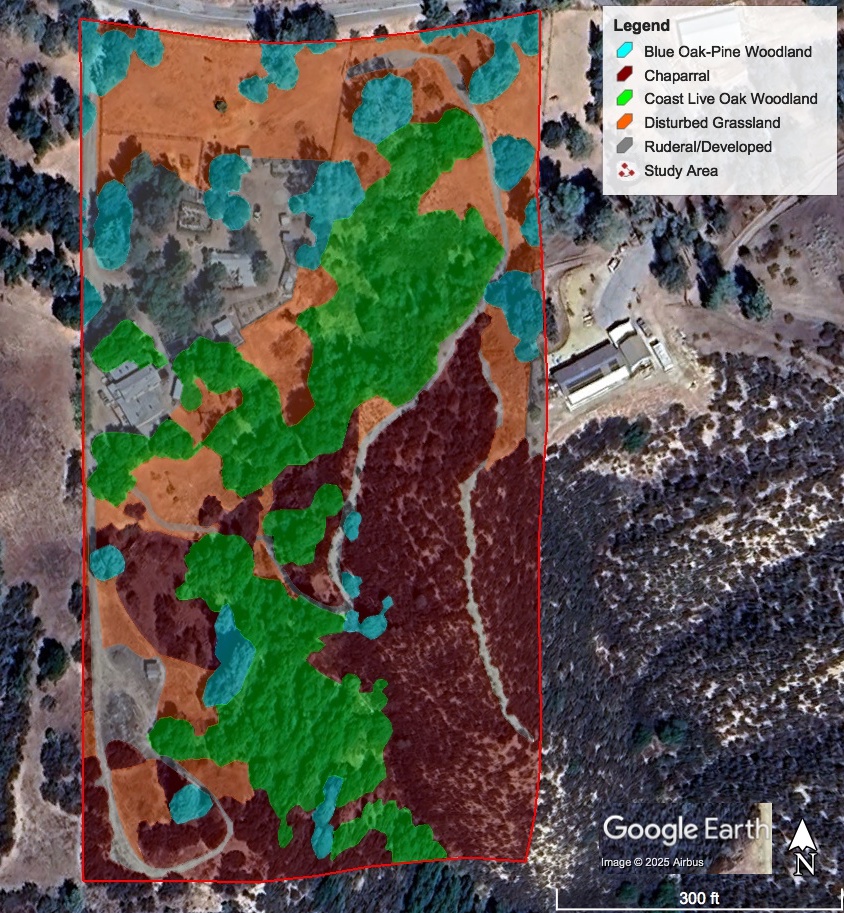
Projects located in the Coastal Zone are also reviewed for consistency with policies related to the California Coastal Act for issuance of a Coastal Development Permit. In some cases, the agency will also require additional information such as an in-season botanical study, San Joaquin kit fox habitat evaluation, or oak tree inventory. These items can be sections in the biological report or performed separately. Dr. Christopher can provide advice on how to plan the survey(s) so that multiple resource issues can be covered simultaneously, minimizing site visits and the length of time for report completion, and avoiding any requirements for supplemental information. For information on additional services see the other tabs.

